

Whether you are recovering from surgery, dealing with a nagging running injury, or managing chronic pain, finding the right physical therapist can make the difference between a frustrating plateau and a full return to the activities you love. This step-by-step guide walks you through exactly how to locate, evaluate, and choose a physical therapist who fits your goals, your schedule, and your budget.
Step 1: Know That You May Not Need a Doctor's Referral
One of the biggest misconceptions in healthcare is that you must see a physician before booking physical therapy. In reality, every state in the United States currently allows some level of direct access to physical therapy, meaning you can often begin treatment without a referral. Direct access is designed to increase accessibility so that people can be evaluated quickly and determine next steps for care. Some insurance plans or employer policies may still require a referral, so it is wise to call your insurer first—but don't let the assumption of needing one delay your recovery.
At Next Level Physio, for example, you can request a free consultation online and get started right away at locations in Woodcliff Lake, NJ, Montclair, NJ, or Cary, NC.
Step 2: Use Trusted Directories and Search Tools
Several high-quality directories can help you find licensed physical therapists in your area:
- APTA's Find a PT (ChoosePT.com) — The American Physical Therapy Association maintains a database where you can search by zip code, specialty, and even filter for telehealth or home-visit options. All physical therapists listed are active APTA members.
- Healthgrades — Lets you filter by patient rating threshold and view profiles of top-rated PTs.
- Zocdoc — Allows you to search by insurance plan, location, and available appointment slots, then book instantly online.
- Google Maps & Google Business Profiles — A quick search for “physical therapist near me” surfaces clinics with reviews, hours, and directions.
Using more than one directory gives you a broader picture and helps you cross-reference reviews.
Step 3: Verify Credentials and Specializations
Not every PT has the same training depth for your specific issue. Here is what to look for:
- Licensure: Confirm the therapist holds a current state license. Look for the credentials “PT” or “DPT” (Doctor of Physical Therapy) after their name.
- Board Certification: The American Board of Physical Therapy Specialties (ABPTS) offers certification in 10 specialty areas, including orthopaedic (OCS), sports (SCS), pediatric (PCS), geriatric, neurologic, and pelvic health. Board certification signals advanced knowledge and clinical experience beyond the baseline degree.
- Condition-Specific Experience: Ask whether the PT regularly treats your condition. If they do not, a good therapist will refer you to someone who does.
At Next Level Physio, every clinician holds a DPT and the team brings specialized expertise across running biomechanics, post-surgical rehab, youth athletics, and pelvic floor therapy—backed by advanced tools like AlterG anti-gravity treadmill training, blood flow restriction, shockwave therapy, and running gait analysis.
Step 4: Check Insurance and Understand Costs
Getting care from an in-network physical therapist will typically lower your out-of-pocket costs. Before your first visit:
- Call your insurance company to verify PT coverage, copay amounts, and whether a referral is required.
- Ask the clinic if they participate in your plan's network.
- Inquire about cash-pay or out-of-network options if you prefer a specific provider. Some PTs accept cash payments outside of insurance, which can offer more flexibility in scheduling and treatment duration.
The clinic's front desk should be able to help you estimate the amount for which you are responsible before treatment begins.
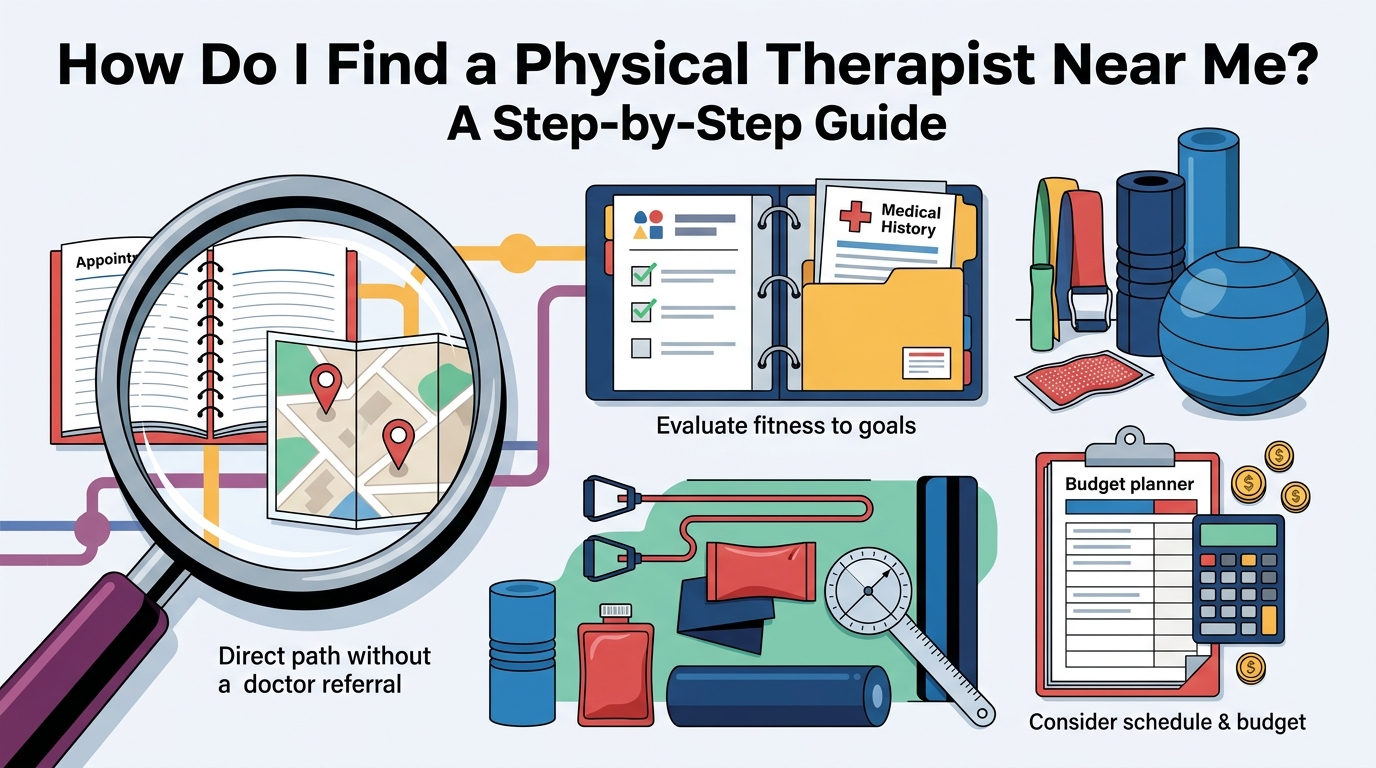
Step 5: Evaluate Location and Scheduling Convenience
Physical therapy is usually a weekly commitment and may last for an extended period of time, so convenience matters. If the facility's location takes you too far out of your usual routine, it will be difficult to keep regular appointments. Consider:
- Proximity to home or work
- Availability of early-morning, evening, or weekend hours
- Telehealth or virtual PT options for exercise-based programs
- How quickly you can get an initial appointment—if you have to wait more than a week or two, especially post-surgery, look elsewhere
Next Level Physio offers flexible scheduling across multiple locations and a personalized onboarding process to ensure you start treatment promptly.
Step 6: Read Reviews and Ask for Recommendations
Online reviews are a valuable window into a clinic's culture. Look for consistent themes like professionalism, effectiveness, communication, and bedside manner. As a general benchmark, a quality PT practice typically maintains 4.5 stars or higher on Google. Beyond online reviews:
- Ask your primary care physician or orthopedist who they recommend.
- Ask friends and family—but remember their injury may differ from yours, so a recommendation might not be a perfect fit for your condition.
- Check the clinic's social media or blog for educational content that signals expertise.
Step 7: Tour the Facility (or Do a Virtual Walk-Through)
Before committing, try to visit or virtually tour the clinic. Pay attention to:
- Whether therapists work with multiple patients simultaneously or provide one-on-one care
- Whether equipment is wiped down between patients
- Whether therapists and assistants wear name badges with credentials
- The overall energy—does the staff seem engaged and supportive?
Clinics like Next Level Physio pride themselves on one-on-one treatment sessions with no double-booking, ensuring you get the full attention of your DPT throughout every visit.
Step 8: Assess Communication and Rapport at Your First Visit
Your physical therapist becomes a partner in your healing process. During your initial evaluation, notice whether the PT:
- Listens to your concerns before prescribing a plan
- Explains the rationale behind each exercise and modality
- Sets clear short-term and long-term goals
- Adjusts the plan as you progress
If you do not leave the first session feeling like you and your therapist are on the same page, it may be a sign to explore other options. You always have the right to choose any licensed physical therapist in your state who participates in your health plan.
Key Takeaways
- You likely don't need a referral. All 50 states have some form of direct access to PT.
- Use directories like APTA's Find a PT, Healthgrades, and Zocdoc to compare providers.
- Verify credentials. Look for PT or DPT licensure and, ideally, ABPTS board certification in a relevant specialty.
- Confirm insurance participation before treatment to avoid surprise bills.
- Prioritize convenience. A clinic close to your routine increases adherence.
- Read reviews and ask around, but match recommendations to your specific condition.
- Evaluate rapport. Great communication predicts better outcomes.
Frequently Asked Questions
Can I go to a physical therapist without a doctor's referral?
Yes, in most cases. Every state allows some level of direct access to physical therapy. However, certain insurance plans or state-specific laws may still require or incentivize a physician referral, so check with your insurer first.
How do I know if a physical therapist is qualified?
Look for the credentials PT (physical therapist) or DPT (Doctor of Physical Therapy). You can verify licensure through your state's board of physical therapy. Additional board certification through ABPTS in a specialty like orthopaedics or sports further demonstrates advanced expertise.
What should I look for in a physical therapy clinic?
Focus on credentials, specialty experience relevant to your condition, insurance compatibility, location convenience, one-on-one treatment time, and patient reviews. Touring the facility beforehand—even virtually—helps you assess cleanliness, equipment quality, and staff engagement.
Does insurance cover physical therapy?
Most health insurance plans cover physical therapy, but coverage details vary. Key questions to ask include: Is the PT in-network? What is my copay? Do I have a visit limit? Is a referral required? Contact your insurer before your first session to understand your financial responsibility.
How many times a week should I go to physical therapy?
Frequency depends on your condition and treatment goals. Most patients attend one to three sessions per week. Your PT will recommend a schedule during your initial evaluation and adjust as you progress.
What is the difference between a physical therapist and a physical therapist assistant?
A physical therapist (PT) holds a DPT degree, performs evaluations, diagnoses movement dysfunctions, and designs treatment plans. A physical therapist assistant (PTA) works under the PT's supervision to carry out portions of the treatment plan. Both are licensed professionals.
Why should I choose Next Level Physio?
Next Level Physio specializes in helping dedicated runners and lifelong athletes over 30 overcome chronic pain and performance plateaus. The clinic offers one-on-one DPT sessions with no double-booking, advanced technology including AlterG anti-gravity treadmills and shockwave therapy, running gait analysis, and a proprietary MEI Method that combines biomechanics, targeted conditioning, and regenerative technology. With locations in Woodcliff Lake and Montclair, NJ, and Cary, NC, the team has treated over 3,000 patients.