

Running is one of the most accessible forms of exercise on the planet — all you really need is a pair of shoes and an open road. But the repetitive impact that makes running so simple also makes it surprisingly risky. Studies suggest that at least 50 percent of regular runners sustain an injury each year, with some estimates putting it even higher. Physical therapy offers runners a proactive, evidence-based path to stay healthy, run faster, and enjoy the sport for decades.
Why Runners Are Uniquely Vulnerable to Injury
Running is a high-repetition, high-impact activity. Every stride sends forces of two to three times your body weight through your joints. Over thousands of steps per run, even small biomechanical inefficiencies compound into tissue breakdown.
Most running injuries fall into the overuse category rather than acute trauma. As the American Academy of Family Physicians notes, most running injuries are due to overuse and respond well to conservative treatment. The two primary causes are typically a lack of strength or stability — and as mileage or speed increases, the body must tolerate and stabilize ever-greater loads.
Common culprits include ramping up mileage too quickly, neglecting strength work, wearing worn-out shoes, and ignoring early warning signs of pain. A physical therapist is trained to identify these risk factors before they become full-blown injuries.
7 Core Benefits of Physical Therapy for Runners
1. Proactive Injury Prevention
The single most valuable benefit of physical therapy for runners is keeping injuries from happening in the first place. By improving strength, flexibility, and running mechanics, physical therapy reduces the risk of common running injuries, allowing you to stay active and train consistently. A physical therapist assesses your movement patterns, identifies weak links, and prescribes targeted exercises to shore up vulnerable areas — especially the hips, glutes, core, and ankles.
2. Professional Gait Analysis
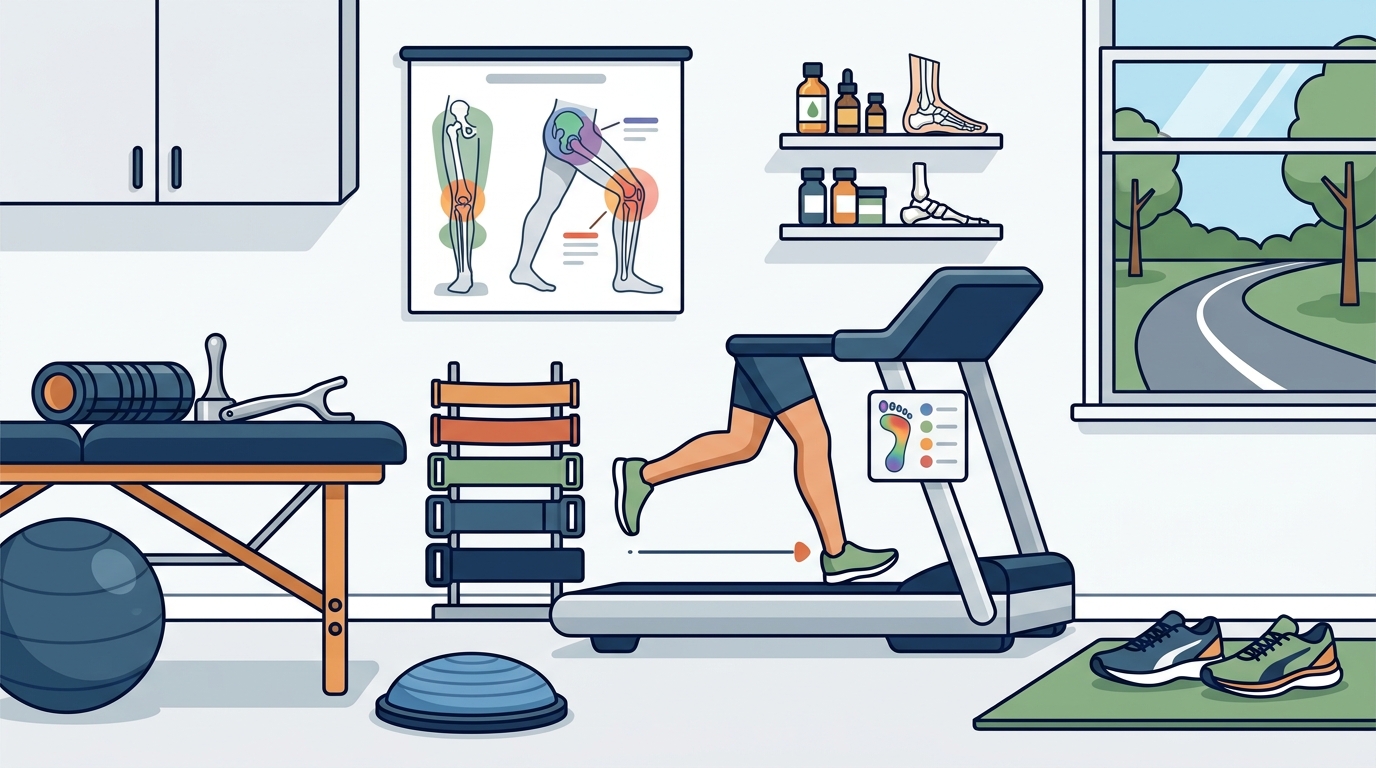
Your running form has a direct relationship with injury risk. There is growing evidence that running technique may play a role in the development — and treatment — of injuries. Modern PT clinics use high-speed video analysis software to film your stride in slow motion, detecting subtle problems in mechanics that the naked eye would miss. Corrections may be as simple as adjusting cadence, modifying foot strike, or cueing better arm swing.
3. Improved Running Efficiency and Speed
Physical therapy does not only fix problems — it optimizes performance. Physical therapy helps runners move more efficiently by addressing movement patterns, posture, and muscle imbalances. When your body wastes less energy fighting compensatory patterns, you conserve fuel, run faster, and sustain effort over longer distances. Targeted speed drills and plyometric exercises prescribed by a PT can further refine coordination and power output.
4. Faster, Safer Recovery from Injury
If an injury does occur, physical therapy accelerates the healing process by addressing the underlying causes of the injury — not just the symptoms. Therapists use a combination of manual therapy techniques, including soft tissue mobilization and myofascial release, along with progressive loading protocols to restore function systematically. The goal is always to return to running stronger and more resilient than before.
5. Personalized Strength and Conditioning Programs
Generic online training plans do not account for your unique anatomy. A physical therapist tailors specific exercises for every joint in the body so that each part of the lower and upper half can work together and adequately adapt to the load placed on them. This includes targeted work on hip abductors, external rotators, quadriceps, core stabilizers, and even intrinsic foot muscles — all of which directly support running mechanics.
6. Pain Management Without Medication
Chronic aches and pains are not an inevitable part of running. Physical therapy is a holistic approach to recovery that offers a less invasive solution compared to more drastic measures like surgery. Therapists use modalities such as dry needling, instrument-assisted soft tissue mobilization, and therapeutic exercise to reduce pain and inflammation — often eliminating the need for long-term use of anti-inflammatory medications.
7. Long-Term Running Longevity
Perhaps the most underappreciated benefit is durability. By building balanced strength, maintaining joint mobility, and learning proper recovery habits, runners who work with a physical therapist set themselves up to enjoy the sport for life. Recovery strategies — from sleep optimization to periodized deloading — are integral to the PT approach and help prevent the burnout cycle that sidelines so many athletes.
Common Running Injuries Physical Therapy Treats
| Injury | Key Symptoms | How PT Helps |
|---|---|---|
| Runner's Knee (Patellofemoral Pain Syndrome) | Pain around or behind the kneecap, worse with stairs or squatting | Hip and quad strengthening, patellar tracking correction, load management |
| IT Band Syndrome | Pain on the outer knee or hip, especially running downhill | Hip abductor strengthening, flexibility work, foam rolling guidance |
| Plantar Fasciitis | Heel or arch pain, worst with first morning steps | Calf and plantar fascia stretching, intrinsic foot strengthening, orthotics assessment |
| Shin Splints (Medial Tibial Stress Syndrome) | Pain along the shinbone during or after running | Lower leg strengthening, gait modification, gradual load progression |
| Achilles Tendinopathy | Pain and stiffness in the Achilles tendon, especially in the morning | Eccentric heel-lowering exercises, load management, manual therapy |
| Stress Fractures | Localized bone pain that worsens with activity | Rest guidance, cross-training plan, return-to-run protocol, bone-loading progression |
Achilles tendinopathy treatment, for example, consists primarily of eccentric heel-lowering exercises — a protocol with strong research support showing significant benefit even after years of follow-up.
What to Expect at Your First PT Visit as a Runner
- Comprehensive evaluation: Your therapist will assess your medical history, current pain points, strength, balance, range of motion, and movement quality. These assessments help identify muscle imbalances and weak spots that can lead to injuries.
- Running-specific assessment: Many clinics offer video gait analysis to evaluate your stride mechanics in real time.
- Personalized plan: Based on findings, you will receive a customized program that may include strength exercises, mobility drills, running form cues, and a structured return-to-run or race-preparation timeline.
- Ongoing adjustment: Your training plan is continually updated as you progress and reach key milestones, ensuring the program evolves with you.
Key Takeaways
- At least half of all runners experience an injury each year — most are preventable with professional guidance.
- Physical therapy addresses root causes (strength deficits, biomechanical faults, training errors) rather than just symptoms.
- Gait analysis, individualized strength training, and manual therapy are the cornerstones of running-focused PT.
- You do not need a referral to see a physical therapist in most U.S. states thanks to direct-access laws.
- Working with a PT proactively — before injury strikes — yields the greatest long-term benefit for performance and longevity.
Frequently Asked Questions
Do I need to be injured to see a physical therapist for running?
No. Many runners see a PT proactively for injury prevention, gait analysis, and performance optimization. Whether you are recovering from an injury, looking to avoid aches and pains while training, or looking to become a more efficient and faster runner, a physical therapy team can help.
How often should runners go to physical therapy?
It depends on your goals. Runners recovering from injury may attend one to three sessions per week initially. Those focused on prevention and performance might visit monthly or during key training blocks for check-ins and program updates.
Can physical therapy actually make me faster?
Yes. By correcting inefficiencies in your stride, strengthening weak muscle groups, and improving mobility, PT can help you conserve energy and generate more power — both of which translate to faster race times.
What is gait analysis and why does it matter?
Gait analysis is a detailed evaluation of your running mechanics, often using slow-motion video. Therapists can detect subtle problems in running mechanics and help you modify your form in real time to decrease pain and improve performance.
Do I need a doctor's referral to see a physical therapist?
In most U.S. states, you can see a physical therapist through direct access without a physician referral, making it easy to get started quickly.
Is physical therapy better than just resting an injury?
Rest alone does not address the underlying cause of most running injuries. Physical therapy identifies the root problem — whether it is a strength deficit, mobility restriction, or training error — and corrects it so the injury is less likely to return.